
Vietnam Economic Outlook 2026 A Defining Phase for Growth
Vietnam enters 2026 at a point where economic stability is no longer the headline, but the baseline. After several years of navigating global uncertainty and domestic adjustments, the country is moving into a new phase of development defined by clearer policy direction, stronger structural foundations, and more predictable market conditions.
For foreign SMEs assessing medium to long term opportunities in Southeast Asia, Vietnam Economic Outlook 2026 offers a more grounded and transparent picture than in previous cycles. Growth is no longer driven purely by speed or low cost advantages, but increasingly by market scale, domestic demand, infrastructure readiness, and regulatory discipline.

Vietnam Economic Outlook 2026 and Growth Priorities to 2030
Vietnam’s economic direction for the 2026 to 2030 period reflects a deliberate shift toward quality driven growth. National development priorities emphasize maintaining solid GDP expansion while strengthening macroeconomic stability, productivity, and long term competitiveness.
The vision toward 2045 positions Vietnam as a high income economy with modern industry and services. While these targets are ambitious, the more important signal for businesses lies in how growth is being approached. Policymakers are placing greater weight on execution quality, risk management, and sustainability rather than short term acceleration.
From a market perspective, Vietnam Economic Outlook 2026 suggests a transition from recovery and consolidation toward a phase where growth is more structured, measured, and aligned with long term economic planning.

Macroeconomic stability as a foundation for business planning
One of the most consistent signals entering 2026 is Vietnam’s focus on macroeconomic stability. Inflation has remained under control, monetary policy has been cautious, and exchange rate movements have been managed within relatively predictable ranges compared to many emerging markets.
For SMEs, this stability directly supports business planning. Pricing strategies, cost forecasts, and investment decisions become more reliable when macroeconomic variables behave within controlled boundaries. Vietnam’s policy approach continues to prioritize stability over abrupt intervention, reducing the risk of sudden shocks that could disrupt operations.
This environment favors companies that plan for sustained market presence rather than short term opportunistic entry.
A more transparent and disciplined competitive environment
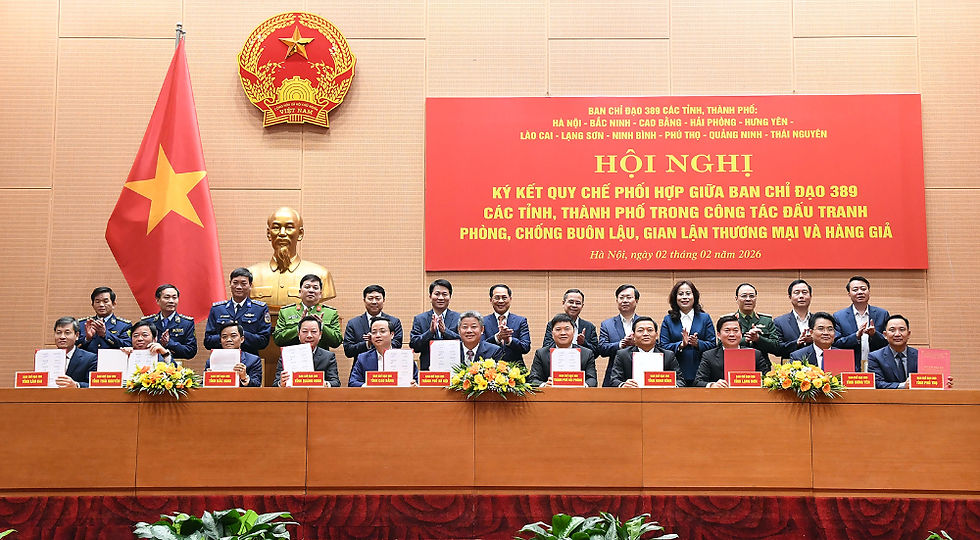
Another defining feature of Vietnam’s outlook is the gradual move toward a more transparent and regulated competitive landscape. Authorities have intensified efforts to address counterfeit goods, smuggling, tax evasion, and informal trade, particularly in retail, logistics, and cross border distribution.
While higher compliance standards increase entry requirements, they also reduce structural distortions. Businesses that operate with proper documentation, quality control, and long term brand strategies are less exposed to unfair competition based on regulatory loopholes.
Over time, this shift strengthens market credibility and supports fairer competition, benefiting companies that invest in sustainable operations.
Administrative restructuring and expanding market scale
Recent administrative restructuring has implications that go beyond governance. Larger provincial units enable more coherent regional planning, improved infrastructure coordination, and greater economic integration across adjacent markets.
From a commercial perspective, this reduces fragmentation. Distribution, logistics, and workforce mobility increasingly operate at a regional scale rather than being confined to individual localities. For SMEs, this translates into easier expansion beyond a single city and more efficient scaling strategies.
Vietnam Economic Outlook 2026 therefore reflects not only population and income growth, but also an expansion in practical market reach.

Infrastructure investment as a growth multiplier
Infrastructure development remains a central pillar of Vietnam’s medium term growth strategy. Major investments in airports, highways, ports, and urban connectivity continue to reshape how goods, services, and people move across the country.
Improved infrastructure lowers logistics costs, shortens delivery times, and enables businesses to serve wider catchment areas more effectively. These benefits are particularly relevant for SMEs in consumer goods, manufacturing, retail, and services, where operational efficiency directly affects margins.
Infrastructure does not create demand on its own, but it amplifies existing demand by making markets more accessible and scalable.

Rising living standards and evolving consumption behavior
As income levels rise, Vietnam’s consumer base is becoming more selective and value oriented. Spending growth is increasingly driven by quality, reliability, and trust rather than price alone. Consumers show greater willingness to pay for compliant products, consistent service, and brands that deliver long term value.
This shift supports more stable demand patterns instead of rapid but volatile consumption cycles. For SMEs, it creates opportunities to compete through differentiation and positioning rather than price driven volume expansion.
Domestic consumption is expected to remain one of the most resilient drivers within Vietnam Economic Outlook 2026.
Urban expansion and emerging growth centers
Urbanization continues to reshape Vietnam’s economic landscape. Beyond traditional metropolitan centers, surrounding provinces and secondary cities are becoming integrated growth zones supported by transport infrastructure and regional planning.
This decentralization eases pressure on major cities while opening new markets with growing demand and lower operating costs. SMEs no longer need to concentrate exclusively in top tier urban areas to achieve scale. Growth can increasingly be pursued through networks of connected regional markets.
Vietnam’s next phase of development
Taken together, Vietnam Economic Outlook 2026 points to a market entering a defining phase for growth. Stability has largely been established, institutions are becoming more disciplined, infrastructure continues to expand, and domestic demand is maturing.
This phase may not deliver the fastest growth rates seen in earlier decades, but it offers something increasingly valuable for foreign SMEs: clarity. Clarity in policy direction, market structure, and long term development priorities allows businesses to plan, invest, and scale with greater confidence.
To understand the foundation established in 2025, particularly in terms of consumption and retail dynamics, readers can explore our earlier analysis on the Vietnam Retail Market 2025 Report, which provides additional context for the outlook ahead.


